Conventional Braces

Traditional fixed orthodontics for cases that need more than clear aligners can deliver. Brackets bonded to your teeth with wires that progressively straighten them - effective for the most complex cases, including significant bite correction.

Conventional Braces

Traditional fixed orthodontics for cases that need more than clear aligners can deliver. Brackets bonded to your teeth with wires that progressively straighten them - effective for the most complex cases, including significant bite correction.

Conventional Braces

Conventional (fixed) braces are the traditional method of moving teeth - small brackets bonded to each tooth, connected by wires that are progressively adjusted to gradually move the teeth into the correct position. It's the most effective orthodontic system for complex cases, particularly where significant bite correction is needed alongside straightening. For independent patient information, read the NHS guide to braces and orthodontics.
For most cosmetic-focused cases where the back teeth don't need to move much - which covers a large proportion of adult orthodontic patients - clear aligners (Invisalign) or short-course fixed systems (Six Month Smiles) are the better fit. They're quicker, less visible, and easier to live with. Conventional braces come into their own when the case is genuinely complex: significant overbite or underbite, severe crowding, teeth that need to be rotated significantly, or cases where exact control of every tooth's position is essential.
At Tangmere we'll only recommend conventional braces when they're genuinely the best option for your specific case. For most adult patients, one of the alternatives (Invisalign or Six Month Smiles) will be the right call. If conventional braces are recommended, we'll explain exactly why and walk you through what to expect.

Planning Your Conventional Braces Treatment

Conventional braces treatment starts with an assessment and a plan for moving your teeth. We explain why fixed braces are recommended, the expected treatment period and the regular adjustment visits involved. After the braces are removed, retainers help hold your teeth in their new positions.
Or call us on 01243 775545

When Conventional Braces Are the Right Choice

Conventional braces are typically recommended when:

  • There's significant overbite, underbite or crossbite that needs correcting alongside straightening
  • The case involves rotating teeth substantially (more than aligners can comfortably manage)
  • Multiple teeth need precise three-dimensional repositioning
  • Bone or jaw alignment work is part of the plan
  • You're a teenager or younger patient where the full orthodontic system is most appropriate
  • Previous orthodontic treatment didn't hold and a more comprehensive approach is needed
For straightforward straightening of front teeth in adults - by far the most common request - we'd usually recommend Six Month Smiles or Invisalign instead. Both are quicker, less visible, and more convenient for adult life.

How Conventional
Braces Work

The general principle is the same as Six Month Smiles, but applied across the whole mouth and continued over a longer treatment period:
Consultation and assessment
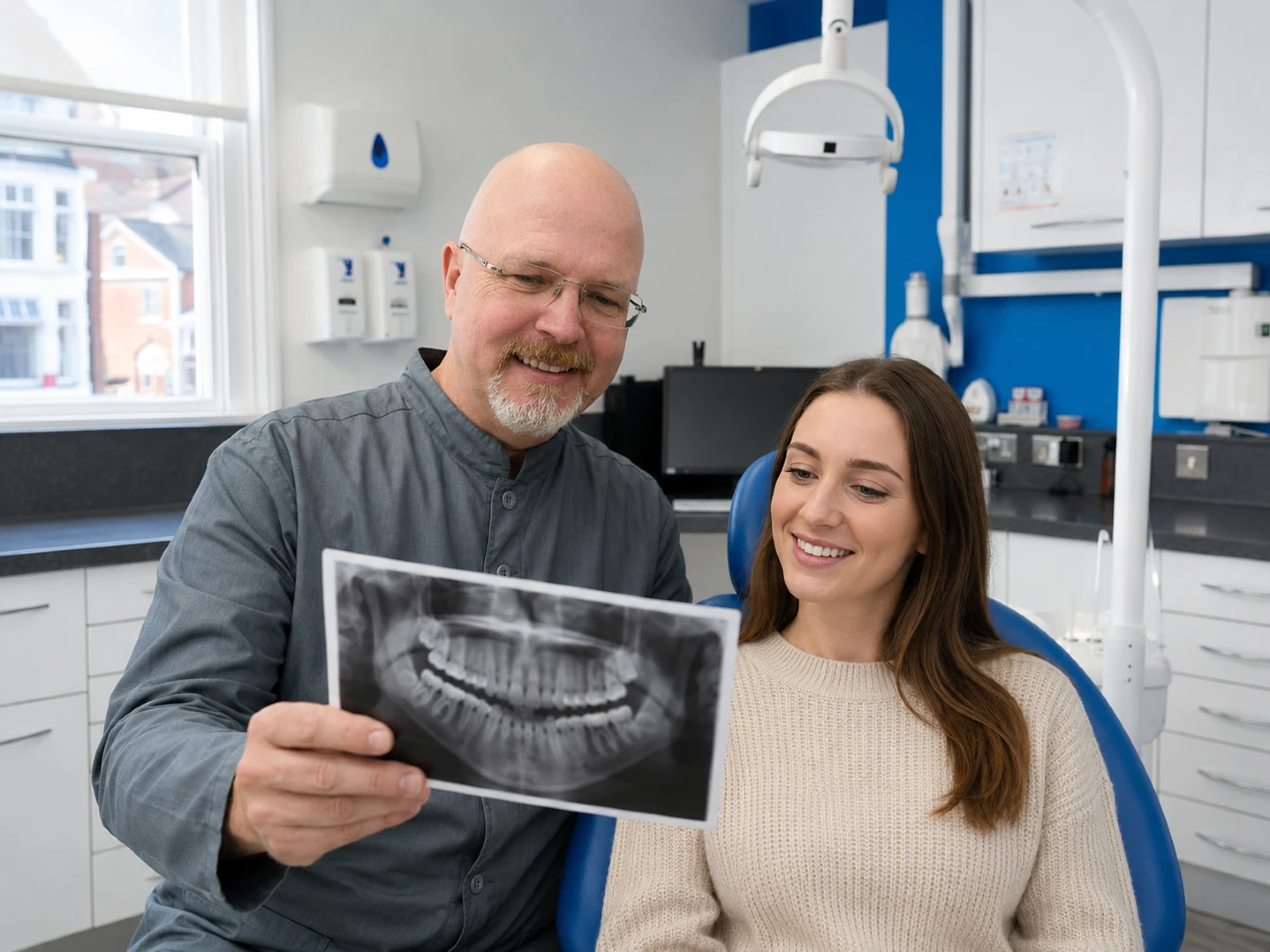
Full diagnostic records including X-rays, impressions or digital scans, and clinical photographs. The orthodontist plans the precise movement of each tooth.
Braces-on appointment
Brackets are bonded to each tooth. Wires are threaded through the brackets and clipped or tied in place. The starting position is set.
Adjustment appointments
Typically every 4-6 weeks throughout treatment. The wires are progressively replaced or adjusted, each one moving the teeth slightly closer to their target positions.
Active treatment period
Usually 18 months to 2+ years, depending on case complexity. Significant movement happens, but it's gradual.
Braces-off and retention
Once the teeth are in the correct position, the brackets are removed. Retainers (usually a fixed wire bonded to the back of the front teeth, plus a removable retainer for night-time wear) hold the teeth in place permanently.

Metal vs Ceramic
Brackets

Two main aesthetic options:

Metal Brackets

The traditional silver-coloured stainless steel brackets. The most cost-effective option, the strongest, and the most predictable for complex movements. The downside is visibility - they're obviously braces.

Ceramic / Clear Brackets

Brackets made from tooth-coloured or clear ceramic. Significantly less visible than metal - many people don't notice them at conversational distance. The trade-offs: slightly larger than metal brackets, slightly more brittle (so occasional bracket repairs may be needed), and slightly more expensive.
For most adult patients we'd recommend ceramic brackets if you're going to have conventional braces - the visual difference over 18+ months is significant.

What Daily Life Is Like
with Braces

Honest version: conventional braces are more demanding than Invisalign or Six Month Smiles. Worth knowing what you're committing to.

Eating

You can eat most things, but you'll need to avoid hard, sticky or chewy foods that can damage the brackets or wires. No toffee, no hard sweets, no chewing ice. Whole apples need cutting up. Steak needs to be in smaller pieces. You get used to this within a few weeks.

Cleaning

Cleaning around brackets and under wires takes longer than normal brushing. You'll need to use specific interdental brushes, possibly a water flosser, and brush more carefully and more often. Hygiene visits during treatment become particularly important - we'd recommend more frequent ones than usual.

Discomfort

The first few days after braces go on, and the day or two after each adjustment, your teeth will be sore. It's not severe but it's noticeable - paracetamol or ibuprofen helps. Some people get a few ulcers from brackets rubbing against the inside of the cheeks in the first week; we provide wax to cover any sharp edges.

Speaking

Most patients adjust quickly. Some get a slight lisp for a few days, which clears as you get used to the brackets.

Visibility

With metal brackets, they're clearly visible. With ceramic, much less so. Coloured elastic ligatures (the small bands that hold the wire in place) are an option for younger patients who want to make a feature of it.

Treatment Time and Cost

Treatment duration

18 months to 2+ years
Typically. Sometimes longer for very complex cases.

Adjustment appointments

Every 4–6 weeks
Throughout treatment.

Payment

Staged across treatment
Specific quote provided after consultation.

Cost

Cost varies significantly by case complexity and bracket type chosen. Conventional fixed orthodontics typically falls within a similar range to comprehensive Invisalign treatment — we'll provide a specific quote after consultation. Payment can be staged across the treatment period.

Retention afterwards

  • Fixed retainer wire bonded behind your front teeth (usually permanent).
  • Removable retainer for night-time wear.
  • Retainers are typically included in the treatment cost.
  • Replacement retainers if lost are charged separately.

When We Refer to a Specialist Orthodontist

For genuinely complex cases, we refer to specialist orthodontists with the right training and equipment:

A referral isn't a step down

It's making sure you're treated by the right person for your case. We'll stay involved as the practice that knows your overall dental health, and we'll coordinate with the specialist throughout treatment.
  • Significant jaw alignment problems
  • Severe crowding requiring extractions
  • Surgical orthodontics
  • Treatment of patients with cleft palate or other specific conditions
Over 300 Five Star Reviews

Real Patient Results

See examples of restorations, smile improvements and orthodontic outcomes from our patients.

Your Conventional Braces Journey

1

Initial Consultation

A full orthodontic assessment to understand your specific case - what needs moving, in what direction, and over what timescale. We'll discuss whether conventional braces are genuinely the right option, or whether Invisalign / Six Month Smiles would work better. We'll also discuss referral to a specialist orthodontist if your case warrants it.

2

Diagnostic Records

X-rays, digital scans, photographs and bite records to allow precise treatment planning.

3

Treatment Plan & Quote

Written treatment plan setting out the duration, the number of appointments, the bracket type recommended, and the total cost. You take this away to consider before committing.

4

Treatment

Braces-on appointment, then adjustment visits every 4-6 weeks for the duration of treatment. Hygiene visits scheduled more frequently than usual.

5

Braces-off and Retention

Brackets removed, retainers fitted. Follow-up checks at 3, 6 and 12 months to confirm the result is stable.

What Makes Tangmere Dental Care Different

Advanced Technology, Natural Approach

We invest in the most modern dental systems — Cerec, magnification, digital imaging — while keeping our care grounded in prevention and the maintenance of health.

Same-Day Crowns & Restorations

Our Cerec system creates solid porcelain crowns, inlays and veneers in a single visit — no impressions, no temporaries, no return appointment needed.

Accessible, Purpose-Built Facility

Ground-floor practice with disabled access, free parking, disabled spaces, and high-capacity dental chairs (up to 29 stone). Easy access from Chichester, Arundel, Bognor Regis and Portsmouth.

Prevention-Led, Long-Term Care

Our focus is on stopping problems before they start. From advanced diagnostics like the Florida gum probe to drill-free options where suitable, we plan care around protecting your health for decades.

Treatment Fees & Combined Medical Plan

We believe in transparent pricing and flexible payment options to make quality private dental care accessible. Our fees are clearly explained before treatment begins, and we offer membership plans to help you spread the cost of routine care.

Treatment Fees

Click below to view our full fee scale across general, cosmetic, restorative and orthodontic care.

Combined Medical Plan

Spread the cost of routine care with our combined dental and healthcare membership plan.

Frequently Asked Questions About Conventional Braces

It depends on your case. For most adult patients wanting straighter front teeth, Invisalign is the better choice - faster, less visible, easier to live with. For complex cases involving bite correction, significant rotation, or substantial back-tooth movement, conventional braces are more effective. We'll be honest about which is right for you at consultation.

Typically 18 months to 2+ years for full conventional braces treatment. Shorter for simpler cases, longer for complex ones. Six Month Smiles, which averages six months, may be an alternative if your case is suitable for it.

Not severely. The first few days after braces go on, and the day or two after each adjustment, your teeth will be sore - paracetamol or ibuprofen handles it. After the first week or two of getting used to the brackets, daily life is mostly normal.

Yes. There's no age limit on orthodontic treatment. Adult teeth move the same way teenage teeth do, just sometimes slightly slower. The key requirement is healthy gums and supporting bone - we'll assess this at consultation.

Yes. For most adult patients we'd recommend ceramic brackets - significantly less visible than metal, with the trade-offs being slightly larger size and slightly higher cost.

Yes - braces can always be removed if you decide to stop treatment. The teeth may not be in their final position though, and what was achieved may relapse without retention. We'd much rather have an honest conversation about any concerns mid-treatment than have you stop and lose the progress.

Call us and book a repair appointment. Don't try to fix it yourself. Brackets occasionally come loose - it's not a disaster, but it does need rebonding before the next adjustment so treatment can continue on schedule.

Yes, in some form. Teeth have memory - they want to return to their original positions, especially in the first year or two after treatment. The fixed retainer wire behind your front teeth stays permanently. The removable retainer for night-time wear continues indefinitely - usually nightly for the first year, then 2-3 nights a week long-term.

For complex cases we refer to specialist orthodontists with advanced training. You'd be treated by the specialist for the orthodontic work, while we stay involved as your general practice for everything else. The total cost depends on the specialist's fees.
Tangmere Dental Care is a private dental practice combining advanced technology with prevention-led, holistic care. Our mission is to help patients across West Sussex maintain healthy, durable smiles for life.
Opening Hours
Monday: 9am – 5pm
Tuesday: 9am – 7pm
Wednesday: 9am – 5pm
Thursday: 9am – 5pm
Friday: 9am – 4pm
Saturday: Mornings by arrangement
Sunday: Closed
Contact Details
Malcolm Rd, Tangmere, Chichester PO20 2HS, UK
01243 775545 smile@tangmeredental.co.uk
Copyright © Tangmere Dental Care is a part of the TDMP Group Ltd