Oral Care at Home

What you do at home matters more than anything we do in the chair. This guide covers brushing properly, cleaning between your teeth, and looking after your gums and tongue, in plain English.

Oral Care at Home

What you do at home matters more than anything we do in the chair. This guide covers brushing properly, cleaning between your teeth, and looking after your gums and tongue, in plain English.

Why home care matters more than you would think

Most patients spend an hour or two a year with us. The rest of the time your teeth are entirely in your hands, and that is where the real work happens. Home care done well prevents most of the treatment we would otherwise need to do, because most fillings, crowns and root canals trace back to bacterial damage that could have been prevented.
One thing worth saying first: technique is hard to learn from reading, and many people have brushed the same way for decades without anyone correcting them. Bring your own toothbrush, toothpaste and floss to your next hygiene appointment so we can work with what you already own.

Brush properly

Every surface of every tooth, twice a day, two minutes each time.

Clean between your teeth

Once a day, because your brush cannot reach the gaps.

Clean at the gum line

This is where gum problems and root decay begin.

Brushing your teeth properly

Twice a day, two minutes each time, every surface of every tooth. Two minutes feels much longer than people expect, and most of us drift down to about 45 seconds without noticing.

2 × 2min

brush twice daily, two minutes each

45°

angle to the gum line

1,450ppm

fluoride, pea-sized amount
Hold the brush at a 45 degree angle to the gum line rather than flat against the tooth, so the bristles work gently into the gum line where plaque builds up first. Use small circles or short back and forth movements rather than big sweeps, and use light pressure. You are disrupting a thin film of bacteria, not scrubbing a pan, and pressing harder only damages the gums and wears the enamel. If your bristles splay within a few weeks, you are pressing too hard.
The inner surfaces facing your tongue are the most commonly missed, and they are where plaque tends to build up most. Tilt the brush vertically to get behind your front teeth, and wrap it around the back of your last molar, which is the most under-cleaned tooth in most mouths.
The evening brush is the important one: your saliva production drops overnight and anything left on your teeth gets eight undisturbed hours to do damage. Avoid brushing straight after anything acidic, such as juice, fizzy drinks, citrus or wine, as acid softens enamel temporarily. Wait 30 to 60 minutes.
An electric brush is generally more effective, though a well-used manual brush beats a badly used electric one. Choose soft or medium bristles rather than hard, pick a smaller head so you can reach the back teeth, and replace it every three months. Use a fluoride toothpaste at the usual adult strength of around 1,450 parts per million, and only a pea-sized amount, or a smear for children under seven. Afterwards, spit but do not rinse with water, because leaving the residue gives the fluoride longer to work.

Angle bristles at 45° into the gum line, not flat against the tooth.
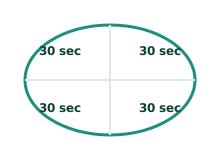
No timer? Split your mouth into four sections and give each one 30 seconds.

Cleaning Between Your Teeth

No toothbrush can reach the surfaces of your teeth that face the neighbouring tooth.

40%

of each tooth missed by brushing alone

24–48hrs

before plaque hardens into tartar
That missed 40 per cent is exactly where most decay and most gum disease start. Aim to clean between your teeth once a day, usually in the evening after brushing.
Traditional

Floss

Leave two or three centimetres to work with and slide it gently between the teeth rather than snapping it down, which cuts the gum. Curve it into a C shape against one tooth, slide up and down two or three times, then curve it the other way for its neighbour. Use a fresh section for each gap.
Best for: tight gaps with no visible space
Often recommended

Interdental brushes

Small brushes on a handle that push gently into the gap, twist a few times and come out. Easier to use correctly than floss, and plaque removal is at least as good for most patients. Most adults need two or three sizes — we'll size you up at your hygiene appointment. Replace when bristles bend or fray.
Best for: larger gaps, tilted teeth, receded gums
Alternative

Water flossers

Send a pressurised stream of water along the gum line. Genuinely useful if you have implants, bridges or fixed braces that floss cannot reach, and for anyone with arthritis or limited hand movement.
Best for: implants, bridges, braces, limited dexterity
Whichever you choose, daily is what counts. Plaque starts hardening into tartar within 24 to 48 hours, and only a hygienist can remove tartar.

Looking After Your Gums and Tongue

Your gums hold your teeth in place, so without healthy gums even perfectly healthy teeth eventually loosen and fall out.
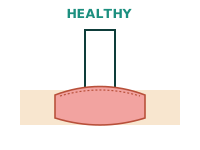
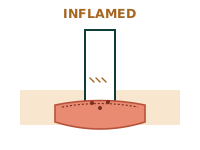
Healthy gums sit tightly against the tooth in a shallow groove. When plaque builds up there the gum becomes inflamed and starts to detach, forming a deeper groove called a pocket. Pockets are bad news, because bacteria thrive in them, they are deeper than a toothbrush can reach, and the body's response slowly destroys the bone holding the tooth in place. That is the mechanism behind most adult tooth loss.
Healthy gum sits tight in a shallow groove. An inflamed gum detaches, opening a pocket where bacteria collect.
Healthy gums do not bleed when you clean. If yours do, that is inflammation — usually the early stage of gum disease, which is fully reversible. Some people stop cleaning when they see blood, thinking they are causing harm, but that is backwards. Bleeding gums need cleaning more, not less, and it usually settles within one to two weeks. If it carries on beyond that, please come and see us.
The good news is that pockets are largely preventable and shallow ones can be reversed. The 45 degree brushing angle plus daily cleaning between your teeth stops most of them forming. Where pockets have already developed, a hygienist can clean below the gum line, and a single-tuft brush helps at home.

Your tongue

Your tongue traps food debris, dead cells and bacteria in its tiny grooves, which build into a coating that contributes a lot to bad breath. Cleaning it takes about 15 seconds.

  1. Place a tongue scraper as far back as you comfortably can.

  2. Pull gently forward to the tip.

  3. Rinse the scraper.

  4. Repeat three or four times — most of the build-up sits on the back third.

A toothbrush works nearly as well, and if you gag, start in the middle and work forward.
Mouthwash is optional. for most people. It freshens breath and adds a small antibacterial effect but does not replace physical cleaning. It does help when treating a gum infection or protecting a mouth at high risk of decay, and we will tell you if that applies. Do not use it straight after brushing, because it washes away the fluoride from your toothpaste.
Finally, tell us if your mouth often feels dry, because saliva washes away debris and neutralises acid. Common causes include ageing, many everyday medications, dehydration, alcohol and smoking. Drinking water and chewing sugar-free gum both help.

Common Questions About
Home Oral Care

For most people, yes. The head does the work and you simply guide it, so it removes more plaque per minute. If your manual technique is very good the gap is much smaller.

Brushing alone is genuinely incomplete. It reaches only about 60 per cent of each tooth, and the surfaces it misses are where most decay and gum disease begin.

No. Bleeding almost always means the gums are inflamed and need cleaning more, not less. Keep cleaning gently every day and it usually settles within a week or two. If it does not, book an appointment.

No, spit rather than rinse. Leaving the toothpaste residue gives the fluoride much more contact time with your teeth.

The evidence is mixed. Brushing before clears overnight bacteria and coats your teeth with fluoride first. Brushing after removes food debris, but wait 30 minutes if breakfast was acidic. We slightly prefer before.

Brush alongside them, and use a timer so the two minutes feels like a game. Supervise until they are around seven, as younger children lack the hand control for a full clean. A hygiene appointment often helps, because children listen to a professional in a way they do not listen to a parent.
Tangmere Dental Care is a private dental practice combining advanced technology with prevention-led, holistic care. Our mission is to help patients across West Sussex maintain healthy, durable smiles for life.
Opening Hours
Monday: 9am – 5pm
Tuesday: 9am – 7pm
Wednesday: 9am – 5pm
Thursday: 9am – 5pm
Friday: 9am – 4pm
Saturday: Mornings by arrangement
Sunday: Closed
Contact Details
Malcolm Rd, Tangmere, Chichester PO20 2HS, UK
01243 775545 smile@tangmeredental.co.uk
Copyright © Tangmere Dental Care is a part of the TDMP Group Ltd